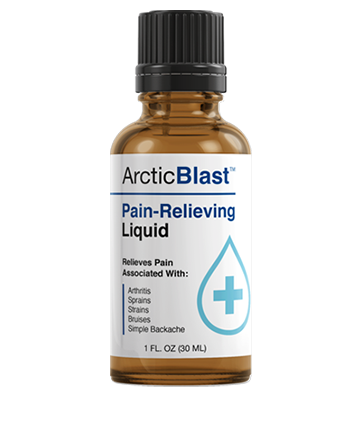
A cooling pain-relieving liquid you drip straight onto the sore spot and rub in — no pills to swallow, no greasy cream, no patch to peel off. Menthol and camphor go to work on contact, while a DMSO-based blend helps carry the cooling ingredients through the skin.
Most pain relief comes as a pill you swallow or a thick cream you smear around and hope lands in the right place. ArcticBlast takes a different route: it is a thin, fast-absorbing liquid in a small dropper bottle. You place three or four drops directly on the sore knee, the aching lower back, the stiff shoulder or the tender elbow, and rub them in. The liquid disappears into the skin in seconds — no grease, no residue on your clothes, no patch edge peeling up by lunchtime.
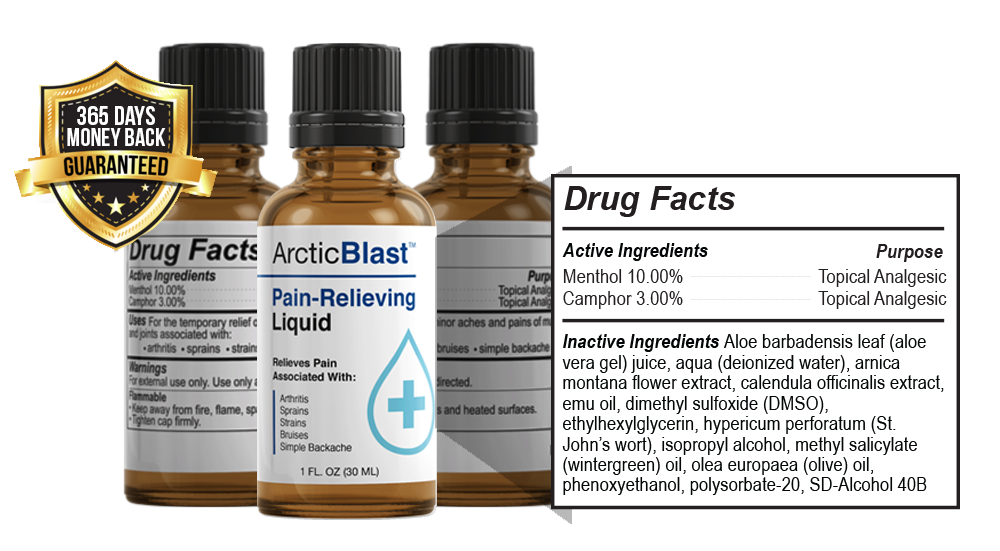
The product is sold by Nutriomo Labs Pte Ltd and checked out through ClickBank, and its label is a proper Drug Facts panel — the format the US Food and Drug Administration requires for over-the-counter external pain relievers — rather than a supplement label. That matters, because a Drug Facts panel must state the active ingredients and their strengths plainly. ArcticBlast's panel names two: menthol at 10.00% and camphor at 3.00%, both listed as topical analgesics. The front of the bottle says it relieves pain associated with arthritis, sprains, strains, bruises and simple backache — the standard temporary-relief wording for this class of product.
ArcticBlast is not a pill and it is not a cure. It is a topical counterirritant: it creates a cooling sensation on the skin that competes with the pain signal underneath it, and it does so exactly where you apply it, without passing through your stomach or your liver first. That is the whole appeal for people who have grown wary of daily oral painkillers, or who simply want something they can reach for when a joint flares up, use, and put away again. Each 1 fl oz (30 ml) bottle is described by the vendor as roughly a 30-day supply, and the offer has been selling through ClickBank since April 2022 — long enough for its gravity on the ClickBank marketplace to tell its own story about steady demand.
One honest note before the detail: the sales pages do not all agree with each other. The price page calls menthol the main ingredient and says to use 3 to 4 drops at least twice a day; the written sales letter puts DMSO at the centre of the story and says a drop or two; the FAQ says 2 to 3 drops. The label itself is the authority — DMSO is listed on it as an inactive ingredient, not an active one — and this page follows the label wherever the marketing and the label disagree. That is the only honest way to write about a product whose pitch is louder than its panel.
ArcticBlast is not a quick fix for the cause of your pain, and it does not work like a painkiller pill. It works topically, in five overlapping ways — each one tied to specific ingredients on the label.
Menthol is the workhorse. At 10% — a strong concentration for a topical — menthol activates the skin's cold receptors (TRPM8), producing the icy, tingling sensation you feel within a minute or two of rubbing it in. That cold signal competes with the pain signal travelling along the same nerves, which is why a cooling rub can make a sore joint feel quieter even though nothing structural has changed underneath. The effect is temporary by design: it is meant to give you a window of comfort, not to switch the pain off permanently. Menthol at 3% to 3.5% has been used in the clinical trials of topical gels, so ArcticBlast's 10% is on the strong side of what has been studied — stronger has not been proven better, but the cooling hit is unmistakably present.
Camphor, at 3%, is the second active ingredient, and it plays a different role from menthol. Where menthol cools, camphor produces a mild warming, stimulating sensation on the skin and increases local blood flow to the area. Used together for generations in liniments and rubs, the two counterirritants complement each other: the cool-warm contrast is part of why a menthol-camphor rub feels more complete than a menthol gel on its own. Camphor's direct evidence base is thinner than menthol's — the clearest trial used a 1% camphor patch and was mainly a study of how expectations shape pain relief — but as a paired counterirritant it has a long history of use in over-the-counter rubs, and its 3% strength sits squarely in the range used by drugstore products.
This is the part of the ArcticBlast story that needs the most careful telling, because the sales letter and the label disagree. The letter presents DMSO (dimethyl sulfoxide) as the star — a solvent famous in research for carrying other substances through the skin — and says it delivers the "cooling healers" deep into the tissue. The Drug Facts panel, however, lists DMSO among the inactive ingredients, with no amount given. The honest reading: DMSO is a genuine skin-penetration enhancer in research settings, and a 10-day study did use 15% DMSO to carry a camphor-and-menthol mix in people with plantar fasciitis — but that result belonged to the whole mix, and in a large 12-week knee osteoarthritis trial of 775 adults, a DMSO solution on its own did no better than placebo. On this page, DMSO is treated as what the label says it is: a carrier and formulation ingredient, not a proven pain reliever in its own right.
Methyl salicylate — wintergreen oil — is listed among the inactive ingredients, with no amount disclosed, and it deserves attention for two reasons. First, it has the clearest trial support of any ingredient in the formula: a patch combining 10% methyl salicylate with 3% l-menthol gave about 40% more pain relief than a placebo patch over 8 hours in 208 adults with mild to moderate muscle strain. Second, it is a salicylate, absorbed through the skin, which is why the label's caution matters: case reports describe raised INR and bleeding in people on warfarin who used methyl salicylate rubs. ArcticBlast does not disclose how much methyl salicylate it contains, so its contribution cannot be compared directly with the studied patch — but its presence is real, and anyone on a blood thinner should clear it with a doctor first.
The dropper format is not a gimmick — it solves a real problem. Creams and gels get on your hands, your clothes and everything you touch; patches cover one fixed area and peel off when you sweat. A few drops of liquid, rubbed in, absorb in seconds and stay where you put them, which is why the format suits people with hand or finger joint pain who struggle to squeeze a tube or spread a cream. Relief from a topical counterirritant typically lasts a few hours — independent testers of ArcticBlast reported the cooling sensation arriving within minutes and comfort lasting roughly 4 to 6 hours — and because it acts locally, you can reapply up to four times a day within the label's directions, or stop using it the moment your skin says enough. Nothing accumulates in your system the way a daily oral painkiller does.
One small bottle, one simple routine — temporary comfort for the everyday aches that follow you through the day.
ArcticBlast is made for the sore spot, not the whole body. A few drops on the aching knee, the stiff lower back or the tender shoulder deliver menthol and camphor exactly to the tissue that is complaining, instead of sending a pill through your entire system to reach one joint. The label's own wording is modest — temporary relief of minor aches and pains associated with arthritis, sprains, strains, bruises and simple backache — and that modesty is a strength: it tells you precisely what to expect, and the product is judged on whether it delivers that, nothing more.
The first thing you notice is the cold. Menthol at 10% triggers the skin's cold receptors fast, and most users feel the cooling wave within a minute or two of application. That quick onset matters when pain is what is stopping you from getting on with your morning — getting out of bed, opening a jar, climbing the stairs — because a topical that takes an hour to work is no use at all. The cooling sensation is the product's signature, and it is also its mechanism: the cold signal competes with the pain signal on the same nerve pathways.
Oral painkillers come with a well-known trade-off: the dose that quiets your knee also passes through your stomach, your liver and your kidneys, and many people cannot take them daily — or at all — because of ulcers, kidney concerns, blood pressure or interactions with other medicines. A topical liquid sidesteps that entirely. ArcticBlast is applied to the skin, acts locally, and does not cause the drowsiness that some oral options do, which means you can use it before driving, before work, or before a walk without worrying about feeling foggy.
Knees that complain on stairs, shoulders that stiffen overnight, a lower back that objects to gardening, elbows that ache after a day of lifting — these are the everyday musculoskeletal complaints ArcticBlast is built for. The combination of menthol, camphor and wintergreen oil is the same counterirritant family found in the drugstore rubs physiotherapists have recommended for decades, in a liquid that reaches awkward spots — the back of the knee, the base of the neck, between the shoulder blades — more easily than a thick cream. It supports comfort during activity, not just while you sit still.
Pain shrinks your world quietly: first you skip the evening walk, then the stairs, then the game with the grandchildren. A topical that takes the edge off for a few hours can be the difference between moving and not moving — and movement itself is one of the best things for stiff joints. ArcticBlast is not a treatment for the underlying condition, and it will not rebuild cartilage or heal a torn ligament, but by easing the discomfort that keeps you on the sofa, it can help you keep the daily activity that keeps joints healthier in the long run.
Anyone who has used a menthol cream knows the ritual: the greasy film, the smell on your hands for hours, the stain on the shirt. ArcticBlast's liquid format absorbs in seconds and leaves no residue, which is a small thing until you have to shake someone's hand or put on a white shirt ten minutes later. The dropper also means you use only what you need — three or four drops per application — so a single 1 fl oz bottle stretches to roughly a month of regular use, and there is no tube to squeeze dry or jar to contaminate with your fingers.
The dropper is the difference between a product and a precision tool. A cream goes roughly where your hand goes; a drop of liquid goes exactly where you place it — the small joints of the fingers, the wrist, the ankle, the temple, the spot behind the knee that no patch ever covers properly. For people whose pain lives in small, fiddly places, or whose hands hurt too much to rub a cream in properly, the dropper format is genuinely easier to use. It also keeps the dose consistent: the same few drops, the same area, every time.
Most pain products offer 30 or 60 days to change your mind. ArcticBlast offers 365 — a full year from purchase, with used, unused or even empty bottles accepted for return. That is one of the longest refund windows in the entire topical and supplement space, and it changes the maths of trying the product: you can use it through a flare-up, through a season, through a change in your routine, and still ask for your money back if it has not earned its place in your bathroom cabinet. Few products back themselves for a year; this one does.
ArcticBlast carries a Drug Facts panel, not a supplement label — so the two active ingredients and their exact strengths are printed on the bottle. The remaining ingredients are listed as inactive, with no amounts published. Nothing below is invented; where the label is silent, this page says so.
The cooling agent and the formula's main active ingredient. Menthol activates the skin's cold receptors, producing the icy sensation that competes with pain signals. At 10% it is stronger than the 3% to 3.5% menthol gels used in the clinical trials we reviewed — the cooling hit is unmistakable, though stronger has not been proven better than the studied strengths. In one small trial, a single dose of 3.5% menthol gel eased pain during the session for people with knee osteoarthritis, even though it did not beat an inert gel overall between groups. Menthol is the ingredient the price page correctly calls the product's main ingredient.
The second active ingredient, listed as a topical analgesic. Camphor produces a mild warming, stimulating sensation and increases local blood flow, balancing menthol's cooling effect — the cool-warm pairing is the classic liniment combination. Its direct evidence is thin: the clearest trial we found used a 1% camphor-based patch for 14 days in 65 cancer survivors with chronic musculoskeletal pain, and its results were mainly about how expectations shaped pain relief rather than a clean camphor-versus-placebo win. At 3%, ArcticBlast's camphor sits in the range used by drugstore rubs, and it is there to complement menthol, not to work alone.
The most talked-about ingredient in ArcticBlast's marketing — and the one most often misunderstood. The written sales letter presents DMSO as the hero that carries the other ingredients deep into the skin. The Drug Facts panel lists it as an inactive ingredient, with no amount. DMSO is a real skin-penetration enhancer in research: a 10-day study used 15% DMSO to carry a camphor-and-menthol mix in 62 people with plantar fasciitis, but that result belonged to the whole mix. In the largest DMSO trial we read — 775 adults with knee osteoarthritis, 40 drops four times a day for 12 weeks — the DMSO solution on its own did no better than placebo. Treat DMSO as a carrier in this formula, not as a pain reliever in its own right.
Wintergreen oil is a salicylate — a chemical cousin of aspirin — and it carries both the best trial evidence and the most important safety warning in the formula. A patch with 10% methyl salicylate and 3% l-menthol gave about 40% more pain relief than a placebo patch over 8 hours in 208 adults with mild to moderate muscle strain, with similar side-effect rates. But methyl salicylate is absorbed through the skin, and case reports describe raised INR and bleeding in people on warfarin who used methyl salicylate rubs. ArcticBlast does not disclose its amount, so no direct comparison with the studied patch is possible — and anyone on a blood thinner, or told to avoid aspirin, should ask a doctor before using it.
Arnica is the botanical with the most respectable evidence in the formula. In 204 adults with hand osteoarthritis, an arnica gel and a 5% ibuprofen gel gave similar improvements in pain and hand function over 21 days — a result a Cochrane review rated as moderate-quality evidence from a single study. ArcticBlast does not say how much arnica it contains, so its contribution cannot be compared with the studied gel, but its inclusion follows a genuine tradition: arnica has been used for bruises, sprains and muscle soreness in herbal practice for generations, and it is a natural fit for a topical aimed at everyday aches.
Aloe vera gel juice is listed first among the inactive ingredients on the Drug Facts panel, and it plays the role of skin soother and base. Aloe is widely used in topical products for its cooling, moisturising feel on the skin, and it helps the liquid spread evenly and absorb without leaving the tight, dry feeling that alcohol-heavy rubs can cause. There are no human pain studies of aloe in this formula to report — its job here is comfort and skin care, not pain relief — but for a product applied to the same patch of skin two to four times a day, a gentle base matters more than it first appears.
Emu oil is a traditional Australian topical oil, rich in fatty acids, long used in folk practice for joint and muscle rubs. In formulation terms it acts as an emollient and a carrier oil, helping the liquid's active ingredients spread across the skin and stay in contact with it long enough to work. The sales pages mention it as part of the blend; the label lists it as an inactive ingredient with no amount. There are no human pain trials of emu oil in this formula to cite, and this page does not claim any — its role is as a skin-conditioning carrier, and it is listed here because the label lists it.
Calendula — marigold flower extract — is another traditional skin botanical, used for generations in salves and creams for minor skin irritation and bruising. In ArcticBlast it sits among the inactive ingredients, contributing to the skin-soothing side of the formula rather than the pain-relieving side. The price page's shorter ingredient list leaves calendula out entirely, which is one of the disagreements between the vendor's own pages; the Drug Facts panel image is the source this page follows, and it lists calendula extract plainly. No human pain studies of calendula in this product were found, and none are claimed.
Hypericum perforatum — St. John's wort — is best known as an oral herbal remedy, but it also has a long history in topical oils for nerve and muscle discomfort. On the ArcticBlast label it appears as an inactive ingredient with no amount disclosed, and the written sales letter lists it while the price page does not — another of the small disagreements between the vendor's pages. There are no human pain trials of topical St. John's wort in this formula to report. One practical note: DMSO helps substances pass through the skin, so avoid layering ArcticBlast with other creams or medicated patches unless your doctor or pharmacist agrees.
Olive oil (olea europaea) rounds out the oil base of the formula, alongside emu oil. As a carrier oil it helps the liquid spread, keeps the skin from drying out under repeated application, and gives the product its smooth, non-sticky feel once absorbed. Like the other botanical inactives, it has no published pain trial behind it in this formula and no dose is disclosed — it is a formulation ingredient, and it is included here because an honest ingredient list includes everything on the label, not only the ingredients with a good story attached.
Other inactive ingredients on the Drug Facts panel: deionized water (aqua), isopropyl alcohol, SD-Alcohol 40B, ethylhexylglycerin, phenoxyethanol and polysorbate-20 — standard formulation aids with no amounts published. The label states the product is for external use only and is flammable: keep away from fire, flame and heated surfaces, keep out of reach of children, and do not use on broken or irritated skin. If you are pregnant or breastfeeding, talk to your doctor first — there is no safety data for this formula in pregnancy.
ArcticBlast was made for adults with everyday muscle and joint aches who like cooling rubs and want a long refund window. You may recognise yourself in one of these groups:
Knees that protest on stairs, a lower back that stiffens after gardening, shoulders that ache after a long day at the desk — the ordinary aches of an active life. ArcticBlast is built for exactly this pattern: temporary relief, applied where it hurts, as often as you need it within the label's directions.
If daily pills are off the table for you — stomach sensitivity, kidney concerns, blood pressure, or simply a preference for keeping medicine local — a topical liquid is the obvious alternative. ArcticBlast acts where you apply it, without passing through your stomach, and it causes no drowsiness.
Squeezing a tube or spreading a thick cream is its own small battle when your hands hurt. A dropper bottle asks almost nothing of your grip: a few drops, a light rub, done. The liquid format is genuinely useful for finger and hand joints, wrists and other small, awkward spots that creams and patches handle badly.
A 365-day guarantee is rare enough to be a reason in itself. If you like to try a product through a flare-up, a season and a change of routine before judging it, ArcticBlast gives you that time — with used and even empty bottles accepted for return.
An honest boundary: ArcticBlast is a topical pain reliever, not a treatment. It does not cure arthritis, heal injuries or replace medical care for chronic pain. If your pain is severe, comes with swelling, redness or fever, or lasts more than a week or so, see a doctor rather than relying on a rub. Do not use it if you take warfarin or another blood thinner without your doctor's OK, if you have been told to avoid aspirin or salicylates, if you are pregnant or breastfeeding, or on children — camphor has caused seizures in young children after swallowing and, in one case, after repeated rubbing on the skin. And never let any topical replace urgent care for sudden, severe or unexplained pain.
A topical works on a different clock from a supplement: the first application tells you most of what you need to know, and the guarantee gives you a full year to be sure. Individual experiences vary — this is a realistic map.
Three to four drops on the sore area, rubbed in. Within a minute or two the menthol cooling arrives — a cold, tingling wave that tells you the product is active. This first use is the honest test: if the cooling sensation and the comfort that follows feel meaningful to you, the product has done its job. If you feel nothing at all, you already have your answer, and the 365-day guarantee means that answer costs you nothing.
By the end of the first week you will know how long the comfort lasts for you — independent testers reported roughly 4 to 6 hours — and how often you reach for the bottle. Most people settle into a rhythm of two applications a day, morning and evening, with an extra application before activity that usually provokes pain. Watch your skin too: stop if it reacts, and keep the bottle away from eyes and broken skin.
A bottle lasts roughly a month at the recommended use, so the end of the first bottle is the natural first judgement point. Ask the practical questions: are you moving more easily, reaching for it less often, or simply getting through the day with less discomfort? If the answer is yes, the 3- and 6-bottle packages — at $46.65 and $33.33 a bottle — are the economical way to continue. If the answer is no, you still have eleven months of guarantee left.
Three months is the fair test for any pain routine: long enough to cover a flare-up and a calm spell, a change in the weather and a change in your activity. Compare like with like — the stairs, the morning stiffness, the drive home — and judge whether the discomfort that used to stop you now lets you carry on. This is also the point where the cost per day becomes concrete: about $2.00 a day on single bottles, $1.11 on the 6-bottle package.
By now ArcticBlast is either part of your daily routine or it is not — and that is the only verdict that matters. Used alongside the habits that genuinely help joints — gentle daily movement, strength work, a healthy weight, good sleep — a topical rub is a support, not a solution, and it works best as one part of that picture. Keep the bottle somewhere you will actually reach for it: the bathroom cabinet, the bedside table, the gym bag.
Twelve months is the complete trial the guarantee allows — the longest window in this product class. By now you have given ArcticBlast a genuinely fair chance through every season. If it has earned its place, keep going; if it has not, contact support, return the bottles (even empty) and claim your refund. Either way, you will have spent the year knowing, not wondering.
Most people weighing up ArcticBlast are really choosing between four paths. Here is an honest look at what each one does — and doesn't — do.
A topical liquid approach. A few drops deliver 10% menthol and 3% camphor exactly where it hurts, with wintergreen oil and a DMSO-based carrier in support, and the cooling sensation arrives within minutes. It acts locally, causes no drowsiness, and leaves no grease. From $33.33 a bottle on the 6-bottle package, with free US shipping and a 365-day money-back guarantee — the longest refund window in its class.
The honest benchmark, and the closest alternative. Drugstore rubs use the same counterirritants — menthol, camphor, methyl salicylate — and also print their strengths on a Drug Facts panel, so you can compare percentages and price per ounce directly. A menthol and methyl salicylate patch has the clearest placebo-controlled result we found. ArcticBlast's edge is the dropper format and the 365-day guarantee; its trade-off is a higher price per ounce than a tube from the pharmacy shelf.
Tablets work systemically and can be very effective, especially for widespread pain — but they pass through the stomach, liver and kidneys, and daily use carries well-known risks: stomach ulcers, kidney strain, blood pressure effects and interactions. Many people cannot take them at all. A topical cannot match a tablet for pain that lives everywhere at once, but for one sore knee or one aching shoulder, local relief without systemic exposure is a fair trade — and the two can complement each other under a doctor's guidance.
The simplest option, and for a while it feels free. But pain that stops you moving has a cost of its own: less activity, stiffer joints, weaker muscles, worse sleep — a slow spiral that is much harder to reverse than to prevent. A topical that takes the edge off for a few hours can be the difference between the walk and the sofa. Doing nothing is free; moving comfortably is worth paying for, and a 365-day guarantee means you can find out whether ArcticBlast delivers that for you at no risk.
Order through the official checkout to qualify for the guarantee and bonuses. Every package is covered for 365 days, with free US shipping.
⚠ High demand — this discounted pricing is not guaranteed to last.
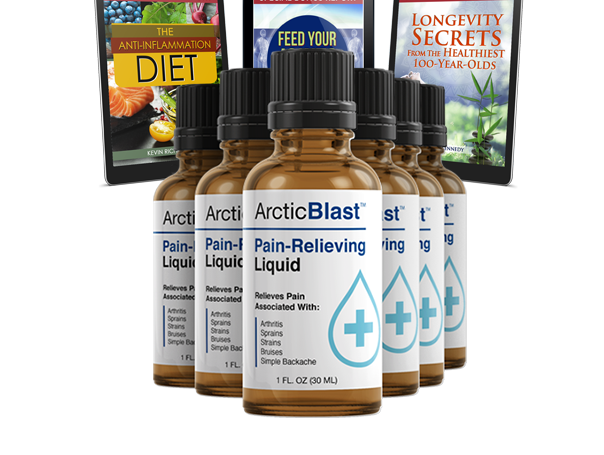
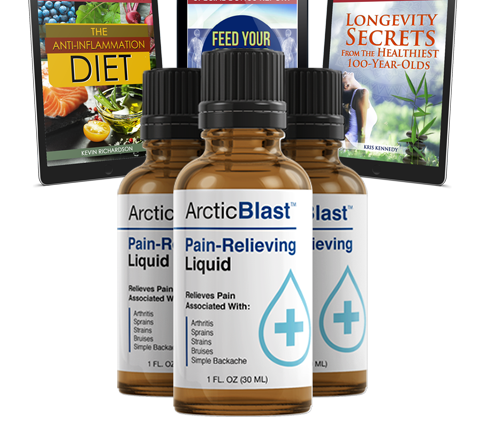
An e-book on the everyday foods that support a healthy inflammatory balance — the dietary side of joint comfort. Regular $37 — FREE today
A report on the nutrients and foods that support joint health from the inside, to pair with the topical relief outside. Regular $29 — FREE today
A report on the habits of the world's longest-lived people — movement, food and daily routines that keep bodies working for decades. Regular $29 — FREE today
Try ArcticBlast for a full year. If you don't feel the cooling relief and comfort you were hoping for, simply contact support, return the bottles (even if they're completely empty), and you'll receive a full, no-questions-asked refund of your purchase price. You have nothing to lose but the ache.
Here is exactly how it works. Your 365 days start on the day you place your order. Use the product as directed — a few drops, rubbed in, up to four times a day — and give it a fair trial through a flare-up and a calm spell. If at any point in those twelve months you decide ArcticBlast is not for you, contact Arctic Blast support (support.getarcticblast.com or 1-800-856-5587) or ClickBank customer support, then mail the bottles — used, unused or empty — to the Arctic Blast Returns Centre, c/o SISK Fulfillment Service, PO Box 463, Federalsburg, MD 21632, with your name and order ID, and your purchase price will be refunded. The pages we reviewed don't say who pays return shipping, so plan for that cost. The guarantee covers orders placed through the official website, which is one more reason to buy there rather than from third-party sellers.
TRY ArcticBlast RISK-FREE FOR 365 DAYS →ArcticBlast is a cooling topical pain-relieving liquid in a 1 fl oz (30 ml) dropper bottle. Place 3 to 4 drops directly on the sore area and rub them in, at least twice a day and no more than four times a day, following the directions on your bottle. It is for external use only — do not swallow it, keep it out of your eyes, and do not use it on broken or irritated skin.
The Drug Facts panel lists two active ingredients: menthol at 10.00% and camphor at 3.00%, both as topical analgesics. The remaining ingredients — including DMSO, methyl salicylate (wintergreen oil), arnica montana flower extract, aloe vera gel juice, calendula extract, St. John's wort, emu oil and olive oil — are listed as inactive, with no amounts published.
No trial has tested ArcticBlast itself. Its labelled actives, menthol and camphor, are common in drugstore rubs, and a menthol plus methyl salicylate patch eased muscle-strain pain more than a placebo patch over 8 hours in a 208-person trial. But DMSO, which the sales letter credits, did no better than placebo on its own in a 12-week knee trial of 775 adults. Independent testers reported the cooling sensation arriving within minutes and comfort lasting roughly 4 to 6 hours. Results vary — the 365-day guarantee exists so you can judge for yourself.
The cooling sensation from the 10% menthol typically arrives within a minute or two of rubbing it in. Comfort from a topical counterirritant is temporary by design — independent testers reported relief lasting around 4 to 6 hours — and you can reapply up to four times a day within the label's directions. It is not a permanent fix for the cause of your pain.
The sales pages show one-time package prices and no subscription or auto-ship wording, and the product is badged as a single payment on its ClickBank listing. The review we relied on could not confirm this from the checkout itself, so check that the order summary shows a single charge for the package you picked before you pay, and keep your receipt.
You have 365 days from purchase. Contact Arctic Blast support (support.getarcticblast.com or 1-800-856-5587) or ClickBank customer support, then mail the bottles — used, unused or empty — to the Arctic Blast Returns Centre, c/o SISK Fulfillment Service, PO Box 463, Federalsburg, MD 21632, with your name and order ID. The pages we reviewed don't say who pays return shipping, so expect to cover that cost yourself.
Ask your doctor before using it. ArcticBlast lists methyl salicylate (wintergreen oil) on its label, and case reports describe raised INR and bleeding in people on warfarin who used methyl salicylate rubs. If you take warfarin or another blood thinner, or you have been told to avoid aspirin or salicylates, get your doctor's or pharmacist's OK first.
It is made in the USA in an FDA-registered, GMP-certified facility, and its actives are standard over-the-counter topical analgesics. Common sense for any menthol and camphor rub applies: keep it out of your eyes and off broken or irritated skin, wash your hands after use, and stop if your skin reacts. The label says it is flammable — keep it away from fire, flame and heated surfaces. Camphor is dangerous for small children, so keep the bottle out of their reach. If you are pregnant or breastfeeding, talk to your doctor first.
DMSO (dimethyl sulfoxide) is a solvent researchers use to help substances pass through the skin, and the sales letter presents it as the ingredient that carries menthol and camphor deep into the tissue. But on the Drug Facts panel, DMSO is listed as an inactive ingredient with no amount given, and the largest DMSO trial we read found it no better than placebo on its own. This page follows the label: DMSO is a carrier in this formula, not a proven pain reliever by itself.
On the official website as checked in November 2026: one bottle is $59.95, three bottles are $139.95 ($46.65 each), and six bottles are $199.95 ($33.33 each). All packages include free US shipping, and the 3- and 6-bottle packages add three free digital bonus reports. Prices change often — confirm the current price at checkout before ordering.
Only through the official website (cb.getarcticblast.com), checked out via ClickBank. It is not sold in stores, and the seller warns against counterfeits on marketplaces. A bottle bought from a third-party reseller may not be covered by the 365-day guarantee, so the official site is the safe place to buy.
The site's terms page names Nutriomo Labs Pte Ltd as the seller, with disputes under the laws of Singapore. The contact page lists an address in Camas, Washington (3242 NE 3rd Avenue #1043, Camas, WA 98607) and the phone number 1-800-856-5587, and returns go to a fulfilment centre in Federalsburg, Maryland. The Better Business Bureau profile for the company shows an A rating (not BBB accredited), one complaint in the last three years, and no customer reviews.
No. Keep it out of your eyes and off broken or irritated skin, and wash your hands after applying it. Menthol and camphor sting badly in the eyes, and the product is flammable, so keep it away from fire, flame and heated surfaces. Apply it only to intact skin on the sore area, exactly as the label directs.
They do — the price page says 3 to 4 drops twice a day, its own FAQ says 2 to 3 drops, and the written letter says a drop or two; the price page lists seven ingredients and leaves out DMSO and emu oil, while the written letter lists those but not calendula or St. John's wort. This page follows the Drug Facts panel image on the official site, which is the most authoritative source, and flags the disagreements rather than hiding them. Always follow the directions on the bottle you receive.
No. It provides temporary relief of minor aches and pains associated with arthritis, sprains, strains, bruises and simple backache — that is the label's wording, and it is the honest limit of what a topical counterirritant does. It does not cure arthritis, heal injuries or treat the underlying condition. If pain is severe, comes with swelling, redness or fever, or lasts more than a week or so, see a doctor.
You'll be taken to the official order page to choose your package, then to ClickBank's secure checkout. The sales pages show one-time package prices with no subscription wording, but confirm the order summary shows a single charge before you pay. After payment, ClickBank sellers often show extra offers — you can decline them. You'll receive tracking details by email once your order ships, and US delivery typically takes 5 to 10 business days.
Same family, different format. Drugstore rubs use the same counterirritants — menthol, camphor and methyl salicylate — and also print their strengths on a Drug Facts panel, so you can compare percentages and price per ounce directly. ArcticBlast's differences are the liquid dropper format, which targets small or awkward spots precisely and absorbs without grease, and the 365-day guarantee, which is far longer than anything on a pharmacy shelf. Its trade-off is a higher price per ounce.
Cooling, targeted relief for as little as $33.33 a bottle, backed by a 365-day money-back guarantee.
GET YOUR 44% DISCOUNT NOW →